
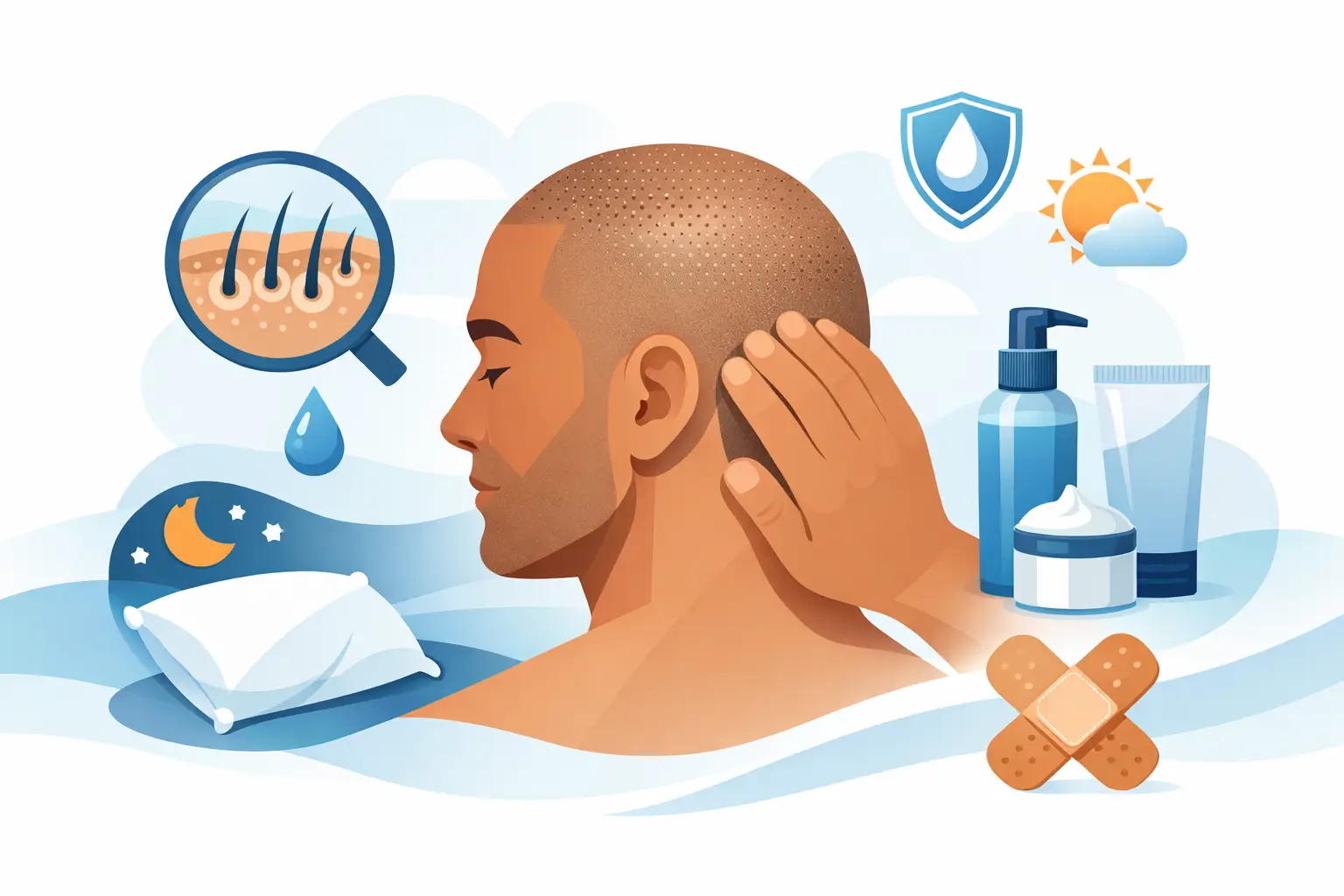
A fresh SMP treatment can look impressively sharp on day one, but the way you treat your scalp over the next several days has a real effect on how evenly it heals. These scalp micropigmentation aftercare instructions are designed to protect the pigment while your skin recovers, helping your finished result look soft, natural, and consistent rather than patchy or prematurely faded.
Your practitioner’s specific advice should always come first. Technique, skin type, the intensity of each session, and whether you have existing scalp conditions can change the plan slightly. Still, most professional aftercare follows the same principle: keep the scalp clean, calm, dry at first, and protected from anything that causes sweat, friction, irritation, or excessive sun exposure.
The first four days: leave the scalp alone
For the first 72 to 96 hours after a session, do not wash your scalp or allow direct water pressure on the treated area. This is the period when the skin is beginning to close and settle around the newly placed pigment. A long shower with steam, rain on an uncovered scalp, or a vigorous workout may seem harmless, but each can introduce moisture and heat before the area is ready.
Avoid touching the scalp unless necessary. Your hands naturally carry oil and bacteria, and repeated touching can irritate tender skin. If you need to wear a hat, ask your practitioner when it is appropriate and choose a clean, loose-fitting option that does not rub the hairline or crown. Tight helmets, fitted caps, and anything that traps heat are usually best avoided during early healing.
You may notice mild redness, tightness, or sensitivity on the first day or two. This is commonly expected after scalp micropigmentation. Do not apply ice directly to the skin, scratch, or try to speed healing with heavy creams. Unless a qualified practitioner has recommended a specific product, less is usually more at this stage.
Scalp micropigmentation aftercare instructions by week
Days 4 to 7: wash gently and avoid sweating
Once your practitioner gives the go-ahead, you can usually begin washing with lukewarm water and a mild, fragrance-free shampoo. Use your fingertips lightly rather than your nails, and do not scrub the scalp. Let the water run over the area instead of aiming a high-pressure showerhead directly at it.
Pat dry with a clean, soft towel. Rubbing can create unnecessary friction, particularly around the hairline where detail matters most. If you have remaining natural hair, keep conditioner and styling products away from the treated scalp unless your practitioner says otherwise.
Exercise is often the hardest restriction for active clients. For roughly the first week, avoid activities that make you sweat heavily, including running, hot yoga, intense weight training, boxing, cycling in high heat, and sauna sessions. Sweat contains salt, and it can sting healing skin while increasing irritation. A relaxed walk in a cool environment may be reasonable, but it depends on how easily you sweat and the guidance you received.
Days 7 to 14: protect the result as the skin settles
By the second week, the scalp often feels normal again. That does not mean the healing process is complete. Continue to avoid direct, prolonged sunlight, swimming pools, the ocean, steam rooms, and saunas until your practitioner confirms that they are safe. Chlorine, salt water, heat, and UV exposure can all interfere with even healing or contribute to early fading.
If you need to be outdoors, use shade and a clean, breathable hat when permitted. Sunscreen should not be applied to a freshly treated scalp until the skin has fully healed and your practitioner approves it. After healing, daily broad-spectrum sunscreen is one of the most practical ways to preserve the color of scalp micropigmentation, especially in Thailand’s strong sun or during any beach or outdoor travel.
Small, dry flakes may appear as the skin renews itself. Let them shed naturally. Picking at flakes can lift healing skin and create uneven-looking retention. This is also why exfoliating products, scalp scrubs, chemical peels, and strong dandruff shampoos should wait until the area has recovered.
Products and grooming to pause temporarily
The scalp does not need an elaborate routine after SMP. It needs a break from potentially irritating ingredients and grooming habits. For the first couple of weeks, avoid alcohol-heavy toners, retinoids, acids, medicated lotions unless medically necessary, hair fibers, sprays, and camouflage products on the treated area.
If you shave your head, wait until the skin is no longer tender, red, or flaky before resuming. Many clients can carefully use an electric shaver after several days, while a razor shave may need a little longer. There is no universal day that suits every person. Shaving too early can cause irritation; waiting too long may be inconvenient if you prefer a closely shaved look. Your practitioner can advise based on your healing and the type of work completed.
Hair coloring, bleaching, relaxers, and other chemical services should also be postponed until the scalp is fully healed. If you have longer hair and are treating visible thinning between existing follicles, tell your stylist that your scalp has recently been treated before any salon appointment.
Sun, swimming, and travel considerations
For many people researching SMP in Thailand, aftercare overlaps with travel plans. It is wise to schedule treatment away from beach days, pool time, long motorbike rides in direct sun, and high-intensity sightseeing. A few quieter days after each session give the scalp the best chance to settle without unnecessary exposure.
Once healed, swimming and normal exercise can return, but sun protection remains a long-term maintenance habit. UV exposure is one of the main reasons pigment can appear lighter over time. This does not mean you must avoid outdoor life. It means treating the scalp as you would any skin area where you want to preserve a cosmetic result: use shade, hats when practical, and sunscreen after full healing.
What is normal, and when to contact a professional
Mild redness, tenderness, dryness, and very light flaking can be normal. The pigment may also look darker immediately after treatment, then soften as the skin heals. This early appearance is not the final result, which is one reason SMP is normally built gradually over multiple sessions rather than made overly dark in one appointment.
Contact your practitioner promptly if you experience increasing pain, spreading redness, significant swelling, heat in the skin, pus, fever, or a rash that worsens rather than improves. These symptoms are not typical aftercare concerns and may need medical attention. People with a history of skin allergies, psoriasis, eczema, autoimmune conditions, or previous reactions to cosmetic tattooing should discuss this before treatment, not after symptoms begin.
Protecting your long-term SMP result
After your final session has healed, scalp micropigmentation is generally low maintenance, but it is not zero maintenance. Sun exposure, skin turnover, immune response, lifestyle, and the original pigment tone all influence how the result ages. Some clients choose a refresh session after several years to restore definition or adjust a hairline as their natural hair pattern changes.
A natural-looking result also depends on keeping expectations realistic. SMP creates the appearance of closely cropped follicles or added visual density. It does not grow hair, stop genetic hair loss, or replace treatment options such as medication or a hair transplant when those better match your goals. For some people, it works best as a standalone confidence solution. For others, it is a valuable complement to transplanted hair, thinning coverage, or an alopecia management plan.
The most useful aftercare decision is simple: give your scalp enough time to heal before returning to your normal routine. A short period of restraint can protect the careful work behind a result that helps you feel more comfortable every time you see yourself in the mirror.
Leave a Reply