
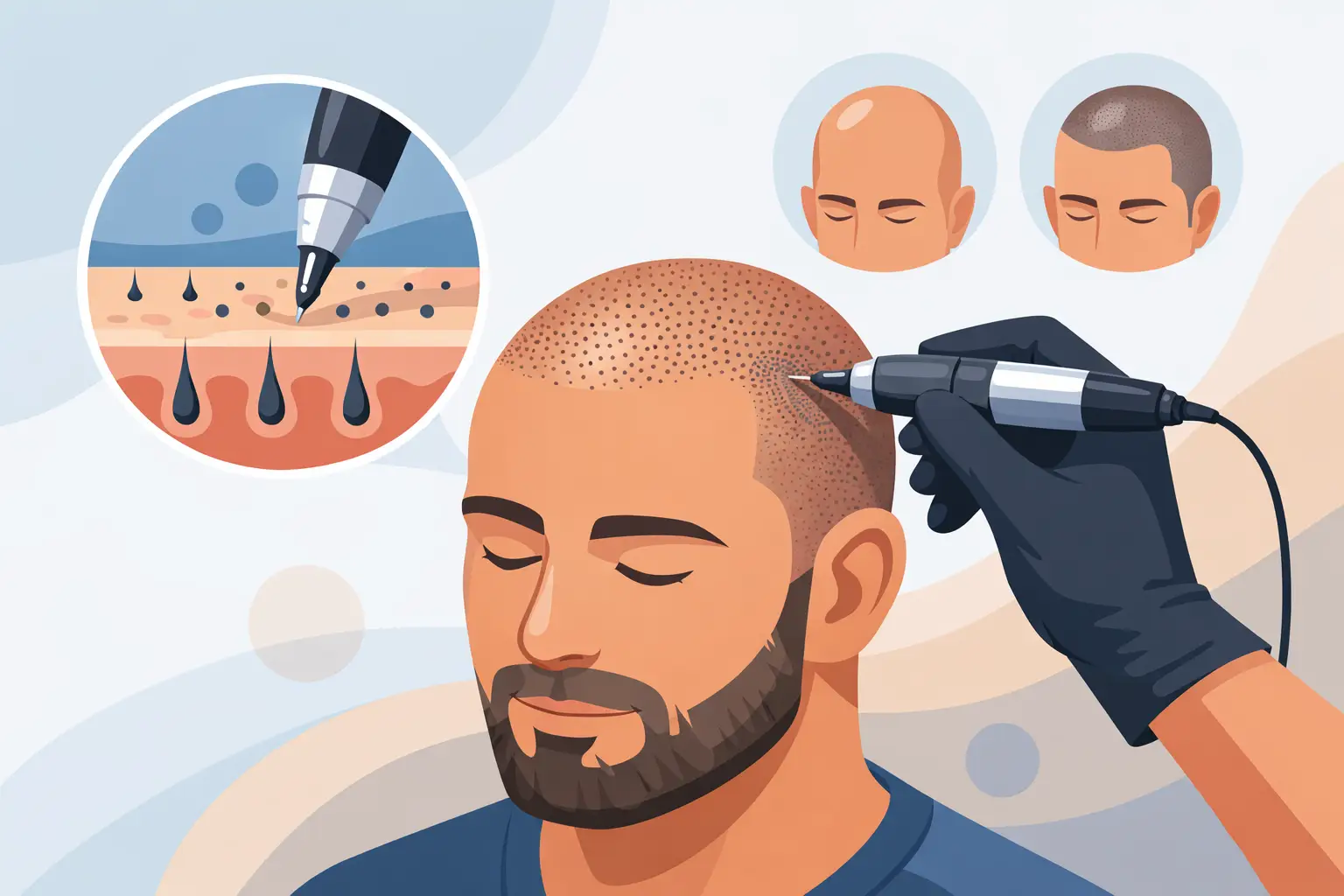
For many people, the question is not whether scalp micropigmentation can create the look of a fuller hairline. It is more immediate: what does scalp micropigmentation feel like? If needles make you uneasy, or you have had an uncomfortable tattoo experience before, knowing what your body is likely to feel can make the decision far less stressful.
The honest answer is that SMP is usually uncomfortable rather than severely painful. Most clients describe a light, repetitive prickling or tapping sensation across the scalp. The intensity varies by person, treatment area, session length, and your own sensitivity on the day. A skilled practitioner works gradually, checks in with you, and adjusts their approach when needed.
What Does Scalp Micropigmentation Feel Like During Treatment?
Scalp micropigmentation uses a fine needle to place tiny pigment impressions in the upper layer of the scalp. These dots replicate the appearance of closely shaved hair follicles. Although SMP is sometimes casually called a hair tattoo, it is not experienced in exactly the same way as a conventional body tattoo.
Most people compare the feeling to light scratching, a fast tapping pen, or small pinches. It is concentrated in a small area at a time, rather than one long, continuous pain. You may notice the sensation more in the first 10 to 15 minutes, then become accustomed to its rhythm.
For a shaved-head SMP treatment, the front hairline can feel more noticeable because the skin is often thinner and the area carries emotional importance. Even so, many clients find it very manageable. The sides and crown may feel milder, though this is highly individual.
For density treatment, where pigment is placed between existing hairs to reduce the contrast of visible scalp, the sensation may be less intense simply because the practitioner works in smaller, carefully controlled sections. However, longer hair can make the area feel warmer or more sensitive during a lengthy appointment.
Does SMP Hurt More Than a Regular Tattoo?
Not necessarily. Traditional tattoos often use deeper needle penetration, larger designs, more extensive shading, and longer passes over the same skin. SMP is designed to deposit pigment much more superficially and uses a dot-by-dot technique.
That does not mean SMP is painless. Someone with a low pain threshold may still find it uncomfortable, especially during a multi-hour session. But many people who have had both procedures say SMP feels less intense than a body tattoo, particularly on bony or highly sensitive parts of the body.
Your practitioner should never dismiss your discomfort. Good treatment is not about proving you can tolerate pain. It is about creating natural results while protecting your comfort and the health of your scalp.
Why Sensation Can Differ From One Person to Another
Pain is personal, and scalp sensitivity can change from day to day. A few factors have an impact on what scalp micropigmentation feels like in the chair.
Your natural sensitivity matters, but so does the condition of your scalp. Skin that is dry, sunburned, irritated, inflamed, or affected by active dermatitis may be more reactive. If you have psoriasis, eczema, folliculitis, or a history of scalp conditions, discuss it honestly before booking. In some cases, it may be better to wait until the skin is calm or seek medical guidance first.
Sleep, stress, hydration, and caffeine can also affect how you experience treatment. Arriving tired, dehydrated, or anxious may make the session feel more difficult than it otherwise would. Alcohol and certain medications can affect bleeding, healing, or sensitivity, so a reputable provider will ask about your health history and give clear pre-appointment instructions.
The practitioner’s technique is another major factor. Needle depth, machine speed, pressure, pigment placement, and pacing all influence comfort. SMP should not involve aggressive, deep scratching. If treatment feels sharply painful, causes significant bleeding, or leaves you distressed, say something immediately.
What It Feels Like After Each SMP Session
Once a session is over, most clients report mild tenderness rather than strong pain. Your scalp may feel warm, tight, or slightly sensitive to touch, similar to a minor sunburn. This often settles within a day or two.
There can also be mild redness, particularly after the first session or around a newly designed hairline. This is expected for many skin types, but it should be temporary. The pigment dots will look darker immediately after treatment, then soften as the scalp heals. That early appearance can be surprising, but it is not the final result.
During the healing period, you may notice light dryness or tiny flakes. Avoid picking or scratching. The goal is to let the scalp recover without disturbing the developing pigment pattern. Your practitioner will explain when you can wash your scalp normally, exercise, sweat heavily, swim, or spend time in direct sun.
Most treatment plans include two to four sessions, usually spaced apart to allow healing and assessment. Later sessions often feel easier because you know what to expect. They are also more refined: the practitioner can build density, adjust tone, and soften transitions without rushing the process.
What Should Not Be Ignored
Mild redness and sensitivity can be normal. Severe swelling, worsening pain, spreading redness, pus, fever, or a rash that does not settle are not typical healing signs. Contact your treatment provider promptly, and seek medical care when appropriate.
It is also wise to be cautious with anyone who promises a completely pain-free procedure, instant perfect results in one session, or treatment without a health consultation. SMP is a cosmetic procedure with real skin and healing considerations. Clear expectations are part of safe care.
How to Make Your Session More Comfortable
You do not need to prepare for SMP as you would for surgery, but small choices can improve comfort. Get a full night of sleep, eat a normal meal beforehand, and drink water throughout the day. Avoid arriving with a sunburned scalp or immediately after an intense workout.
Wear comfortable clothing and plan for a session that may take several hours. Bring headphones if music, a podcast, or an audiobook helps you stay relaxed. Some clients prefer quiet conversation; others would rather rest. Let the practitioner know what helps you feel at ease.
If you are nervous about pain, say so before the first dot is placed. A professional will explain the process in plain language, test a small area if appropriate, and check your comfort level throughout the appointment. Depending on the provider’s protocol and your skin, topical numbing options may be discussed, but they are not always necessary or suitable for every client.
Is the Sensation Worth It?
Only you can decide whether the temporary discomfort feels worthwhile. For many people, SMP offers a practical route to a sharper hairline, the appearance of greater density, or a more balanced look after hair transplant surgery. It does not regrow hair, and it is not the best fit for every pattern of hair loss. But it can be a powerful option when expectations are realistic.
The key trade-off is straightforward: a few sessions of manageable scalp sensitivity in exchange for a long-lasting cosmetic result that will still require sensible sun protection and occasional refresh sessions over time. Results depend heavily on the practitioner’s skill, your scalp type, the progression of your hair loss, and how well the treatment plan suits your lifestyle.
Whether you are considering SMP in Thailand or comparing it with transplant surgery, medication, or other approaches, do not let fear of the unknown make the decision for you. Ask direct questions, choose a provider who takes your comfort seriously, and give yourself the space to make an informed choice that supports your confidence.
Leave a Reply