
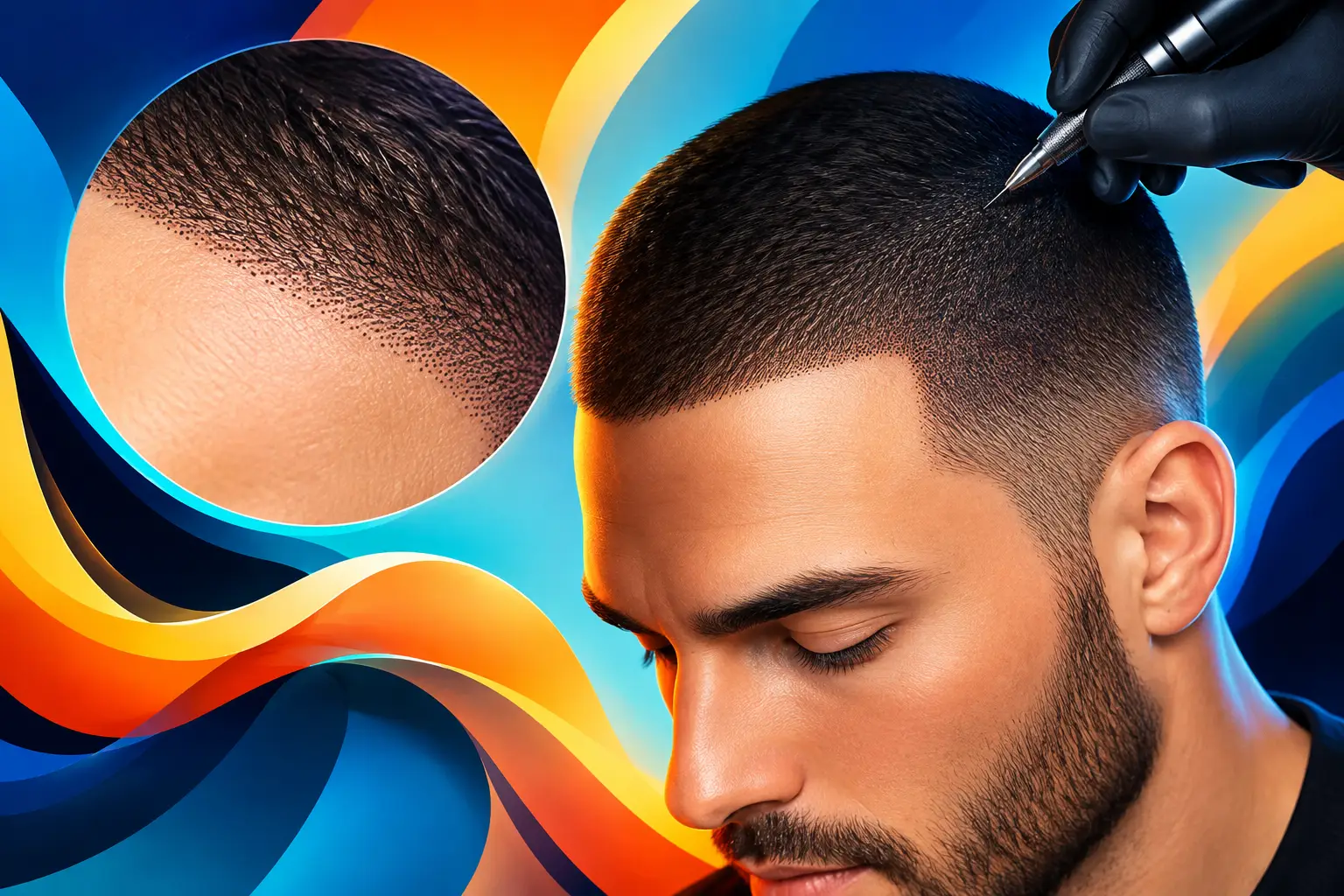
A hairline can change how someone sees their face before they have even had time to adjust to hair loss. SMP technology offers a way to restore the appearance of density or a close-shaved hairstyle without moving hair follicles or relying on a daily cosmetic cover-up. It is not a medical cure for hair loss, but for the right person, it can be a precise and confidence-building visual solution.
The detail that separates convincing scalp micropigmentation from an obvious result is not simply the pigment. It is the planning: the hairline shape, the spacing of each impression, the shade selection, the existing hair pattern, and the willingness to build results gradually rather than force a dark result in one visit.
What Is SMP Technology?
Scalp micropigmentation is a specialized cosmetic procedure that deposits tiny pigment impressions into the upper layers of the scalp. When placed in carefully controlled patterns, these impressions resemble the appearance of closely shaved hair follicles. This is why people sometimes refer to SMP as hair tattoos, although the comparison is incomplete.
Traditional tattooing is designed to create bold, long-lasting artwork in the skin. SMP uses different techniques, pigments, needle configurations, depth control, and spacing. The aim is not to draw individual hairs. It is to create the optical effect of natural follicle shadow when viewed at a normal social distance.
For a person with a fully shaved scalp, SMP can create the look of a defined buzz cut and hairline. For someone with thinning hair, it can reduce the contrast between the scalp and existing hair, making the hair appear fuller. It can also be used to camouflage certain transplant scars, depending on the scar type, condition, and the specialist’s assessment.
How the Procedure Creates a Natural Result
A natural-looking treatment depends on layers. Rather than making the scalp immediately dark, a practitioner typically begins with a lighter foundation and adds density over multiple sessions. This allows the work to settle and gives the specialist room to adjust tone, softness, and distribution.
Hairline design comes first
A good hairline should suit the person’s age, facial proportions, skin tone, and likely future pattern of hair loss. A very low, sharply straight hairline may look appealing in a photo, but it can become less believable over time. Many of the strongest SMP results use a softly irregular edge that imitates how real follicles naturally grow.
This is also where personal preference matters. Some people want a conservative, mature hairline. Others prefer a stronger frame around the face. The right choice is not based on one template. It should reflect the look you can maintain comfortably and confidently.
Pigment placement builds density
The specialist places thousands of small impressions with controlled spacing. In thinning areas, those impressions are blended among existing hairs to lessen visible scalp show-through. In areas with little or no hair, the pattern is adjusted to avoid a flat or stamped appearance.
Density must match the surrounding hair. If the pigment is too dark, too large, or packed too tightly, it can look artificial, especially under bright overhead lighting. A skilled practitioner knows that restraint often produces the more realistic outcome.
Color selection is more than choosing black
Scalp pigment is selected to work with the client’s natural hair color, skin undertone, and expected fading pattern. Pure black can heal with an overly cool or harsh appearance on some skin tones. A properly selected shade should blend into the overall look instead of appearing like a solid block of color.
Because skin, sun exposure, and personal grooming habits vary, the final appearance can never be judged only on treatment day. This is one reason staged sessions and clear aftercare instructions matter.
Who Can Benefit From Scalp Micropigmentation?
SMP can suit men and women with different hair-loss concerns, but it is not the same solution for every concern. People with a receding hairline or extensive male-pattern baldness may choose it to create a shaved-head look with clearer facial framing. Those with diffuse thinning may use it to create the appearance of greater density while keeping their existing hair.
It may also be considered by people with alopecia-related patchiness, provided the scalp condition is stable and appropriate for treatment. For transplant patients, SMP may help reduce the visibility of donor scars or add the look of density between transplanted hairs. In these cases, timing is important. The scalp must be fully healed, and the plan should complement rather than interfere with medical or surgical care.
SMP is especially practical for people who like very short hair or are comfortable committing to that style. It does not grow, move in the wind, or add length. If your main goal is a longer hairstyle with more physical volume, hair transplantation or other approaches may be more suitable.
SMP Technology Compared With Other Hair-Loss Options
The best path depends on the cause of hair loss, the amount of donor hair available, your budget, your health history, and the result you want to see in the mirror.
Hair transplantation redistributes living follicles from a donor area to thinning or bald areas. It can provide real growing hair, but it is a surgical procedure and requires enough suitable donor supply. Results also take time, and some patients still benefit from SMP afterward if they want the visual impression of additional density.
Medication may slow certain forms of hair loss or support existing hair growth. It does not create an instant new hairline, and suitability should be discussed with a qualified medical professional. For some people, medication and SMP work well together: one supports existing hair while the other improves the appearance of the scalp.
Topical fibers, sprays, and concealers can provide temporary coverage, but they require regular application and may be less convenient around sweat, rain, swimming, or travel. SMP is intended as a longer-term cosmetic solution, though it still requires maintenance over the years.
The key distinction is simple: SMP changes the appearance of the scalp, while transplants and some medications aim to change hair growth itself. Neither approach is automatically better. The right treatment is the one that matches your priorities and realistic expectations.
What to Expect Before, During, and After Treatment
A responsible consultation should cover your hair-loss history, goals, current treatments, medical considerations, scalp condition, and preferred hairstyle. Bring reference photos if helpful, but stay open to professional guidance about what will look natural on you rather than on someone else.
Most SMP plans involve two to four sessions, often scheduled with time between them for healing and assessment. The first session establishes a foundation. Later sessions deepen the result and refine areas such as the front hairline, temples, crown, or scar tissue. Session length varies with the size and complexity of the treatment area.
Discomfort is commonly described as manageable, though pain tolerance differs. A reputable provider should explain what to expect honestly instead of promising that everyone will have the same experience.
Aftercare usually includes avoiding heavy sweating, swimming, direct sun exposure, and washing the treated area for a short period after each session. Once healed, sunscreen and basic scalp care help preserve the appearance. Fading is gradual, not immediate, and periodic touch-ups may be needed. How often depends on skin type, sun exposure, pigment choice, and lifestyle.
Choosing an SMP Specialist With Care
A portfolio matters, but it should be evaluated closely. Look beyond dramatic before-and-after photos. Ask to see healed results in natural lighting, varied skin tones, and cases similar to your own hair-loss pattern. Fresh pigment can appear darker than its healed outcome, so immediate photos do not tell the full story.
You should also ask about training, hygiene practices, pigments, session planning, aftercare, and touch-up expectations. A specialist should be comfortable discussing limits. For example, scar camouflage may require a patch test or may not be advisable for raised, unstable, or sensitive scar tissue. Active scalp irritation or infection should be addressed before treatment.
For people considering treatment in Thailand, planning should include more than comparing prices. Allow enough time for consultations and sessions, check how aftercare will work once you travel home, and choose a provider who communicates clearly in a language you understand. Hair restoration is personal. Feeling heard is part of making a sound decision.
SMP technology is most convincing when it supports your life rather than demanding constant attention from it. Take time to compare your options, choose a realistic hairline, and work with a specialist who values a natural result as much as you do. The goal is not to look like someone else. It is to feel more comfortable being seen as yourself.
Leave a Reply