
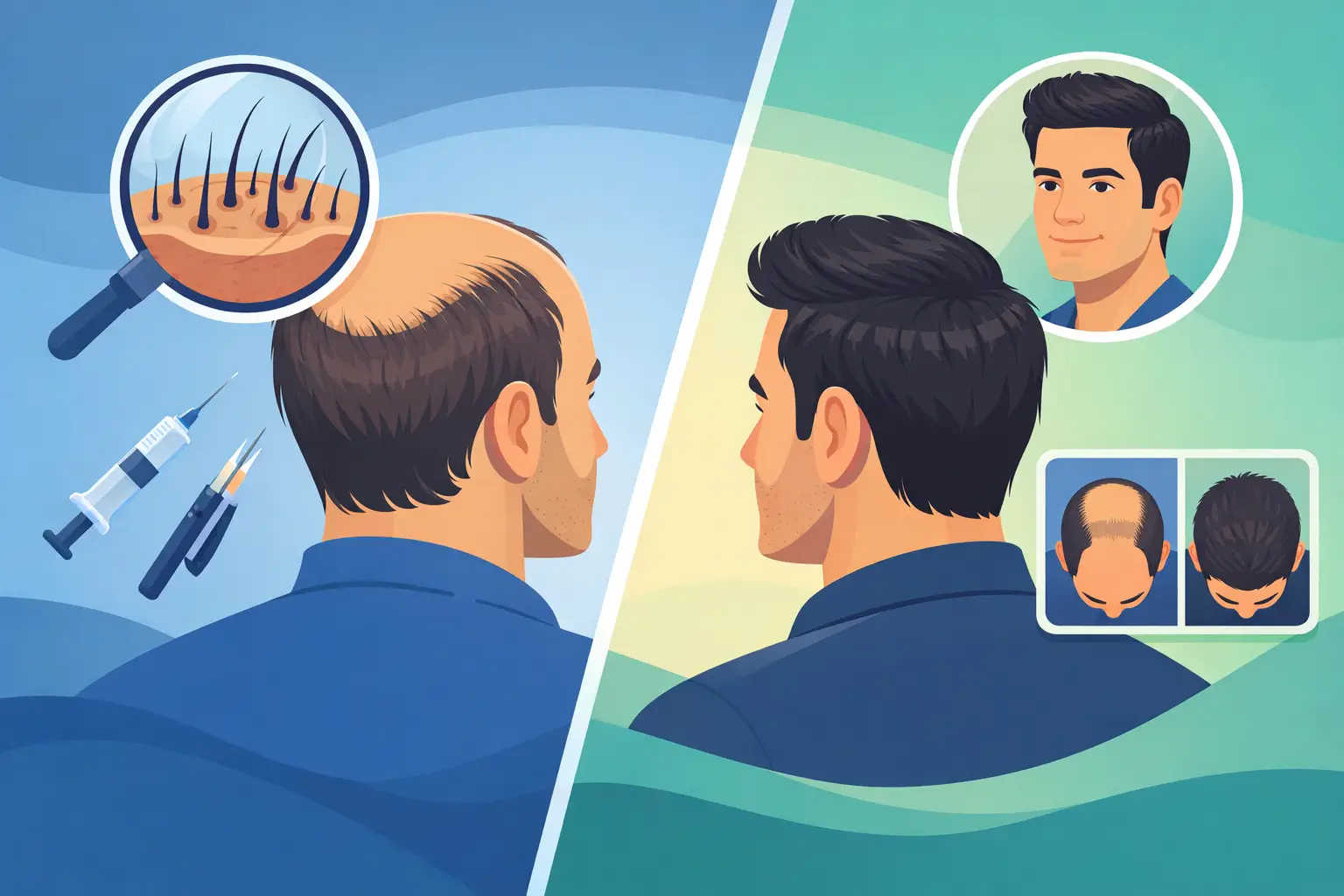
A convincing hair transplant before after result is rarely just about the final photo. It reflects the quality of the donor area, the design of the hairline, how the grafts were placed, the patient’s natural hair characteristics, and the patience to let a slow biological process unfold. For anyone considering treatment, learning to read these results critically can turn a hopeful image into a more informed decision.
The strongest outcomes do not try to create a hairline that looks perfect at age 20. They aim for a natural, age-appropriate appearance that still makes sense years from now. That distinction matters, especially when hair loss has affected confidence for a long time.
Hair Transplant Before After: Read the Timeline First
A before-and-after comparison should clearly state when the “after” photo was taken. A result at three months, six months, and 12 months can look dramatically different, even when the procedure and healing are progressing normally.
In the first few weeks after surgery, tiny scabs form around the transplanted grafts. The transplanted hairs often shed shortly afterward. This can feel alarming, but shedding is a common part of the growth cycle. The follicles remain under the skin and need time to begin producing new hair.
Most patients begin to see early growth around months three to four. At six months, coverage may be visible but still fine, uneven, or less dense than the final outcome. The most meaningful hair transplant before after comparison is usually made around 12 months, while crown-area growth can continue to mature for 12 to 18 months.
A clinic should be comfortable showing results from several stages, not only a carefully selected final image. This gives you a realistic picture of the recovery period, including the temporary stage when the hair may look thinner before it looks better.
What a Natural Result Actually Looks Like
Natural does not necessarily mean extremely dense. A successful transplant uses a limited donor supply to create the impression of coverage in the areas that matter most. Hairline framing, the frontal third of the scalp, and strategic placement can make a major difference to how full the hair appears in everyday life.
Look closely at the transition from forehead to hairline. A well-designed hairline is irregular in a controlled way, with softer single-hair grafts at the leading edge and greater density behind it. A straight, overly low, or sharply defined line can look unnatural, particularly as a person ages or if surrounding native hair continues to thin.
Hair direction is equally important. Transplanted hairs need to follow the natural angle and flow of existing hair. This is especially visible at the temples, frontal hairline, and crown, where growth patterns can be complex. Good before-and-after images are taken in clear lighting and from multiple angles because a single frontal photo can hide weaknesses in coverage or design.
Texture also changes expectations. Coarse, wavy, or curly hair generally creates more visual coverage per graft than fine, straight hair. Light hair against light skin may appear fuller than dark hair against a light scalp, even with the same graft count. A responsible consultation considers these factors rather than promising a result based on someone else’s photographs.
Density Is Not the Same as Coverage
Many people see a dense-looking result and assume the clinic used a large number of grafts. Sometimes that is true, but styling, lighting, hair caliber, and the size of the treated area can all influence the image.
Coverage means distributing available grafts across a larger area. Density means placing more hairs into a smaller area. If someone has advanced hair loss, restoring a full hairline, dense mid-scalp, and thick crown in one procedure may not be realistic without exhausting the donor area. A skilled surgeon helps prioritize the areas that will have the greatest visual impact.
This is one of the most important trade-offs in hair restoration. A conservative, well-planned transplant may look less dramatic in a close-up photo than an aggressively packed hairline, but it can protect options for the future. Native hair may continue to miniaturize, and donor hair is not unlimited.
Ask whether the after photo shows dry hair, wet hair, styled hair, or hair fibers. None of these details automatically make a result misleading, but they should be disclosed. Honest photography allows you to evaluate the treatment rather than the presentation.
The Before Photo Matters as Much as the After
A meaningful before image shows the true starting point. It should reveal the hairline, temples, mid-scalp, crown, and donor area under consistent lighting. Without that context, it is impossible to judge how much improvement was achieved.
Pay attention to whether the patient had diffuse thinning, a receding hairline, a bald crown, or hair loss across several zones. A person with early recession may achieve a visually striking change with a modest number of grafts. Someone with more extensive baldness may achieve an equally successful outcome through improved framing and coverage, even if the scalp is not fully concealed.
The donor area deserves attention too. Most transplants use follicles from the sides and back of the scalp because these hairs tend to be more resistant to genetic hair loss. If too many follicles are harvested, the donor area can look thin, especially with short hairstyles. This is why donor assessment should be part of every treatment plan, not an afterthought.
Surgery Is Only One Part of a Long-Term Plan
A hair transplant redistributes existing follicles. It does not stop progressive hair loss in untreated areas. For some patients, medication prescribed by a qualified clinician may help preserve native hair and support a more stable-looking result. Others may decide medication is not suitable because of health considerations, personal preference, or possible side effects.
Your plan may also depend on age and the pattern of hair loss in your family. A young patient with rapidly changing hair loss needs a more cautious hairline design than someone whose pattern has been stable for years. There is no single right path, but there should be a plan for what happens if thinning continues.
For people who want the appearance of greater density without using additional donor grafts, scalp micropigmentation can be worth discussing. SMP uses carefully layered pigment to reduce the contrast between hair and scalp. It can create the look of a closely shaved hairline, make thinning areas appear fuller, camouflage certain scars, or complement a transplant with limited density. Often described as hair tattoos, professional SMP is more specialized than a conventional tattoo: pigment depth, tone, dot size, and placement are designed specifically for the scalp.
A transplant and SMP are not competing answers in every case. The right choice depends on your hair-loss pattern, donor capacity, preferred hairstyle, budget, willingness to undergo surgery, and maintenance expectations.
Questions to Ask When Viewing Results
Before relying on a clinic’s gallery, ask when each after image was taken and whether the patient used medication or SMP alongside surgery. Ask how many grafts were transplanted, what area was treated, and whether the patient had a previous procedure. You should also ask to see results for people with a hair type, skin-to-hair contrast, and degree of hair loss similar to yours.
It is reasonable to request photos taken in ordinary lighting, with dry and unstyled hair where possible. Ask about donor-area healing and whether the result is from one procedure or multiple sessions. A provider who explains the limits as clearly as the potential benefits is helping you make an informed decision.
For patients traveling to Thailand, continuity of care deserves special attention. Confirm how follow-up is handled after you return home, what recovery guidance is provided, and who you can contact if you have concerns during healing. Cost can be an advantage, but it should never replace careful evaluation of medical credentials, surgical planning, and transparent communication.
A Result That Supports Your Confidence
The best outcome is not necessarily the most dramatic before-and-after transformation online. It is the result that fits your features, preserves future options, and lets you feel more comfortable when you look in the mirror without constantly thinking about your hair.
Take your time with photos, ask precise questions, and compare surgery with non-surgical options before committing. When your expectations are grounded in how hair actually grows and changes, you are better positioned to choose a treatment plan that feels right for your life and confidence.
Leave a Reply