
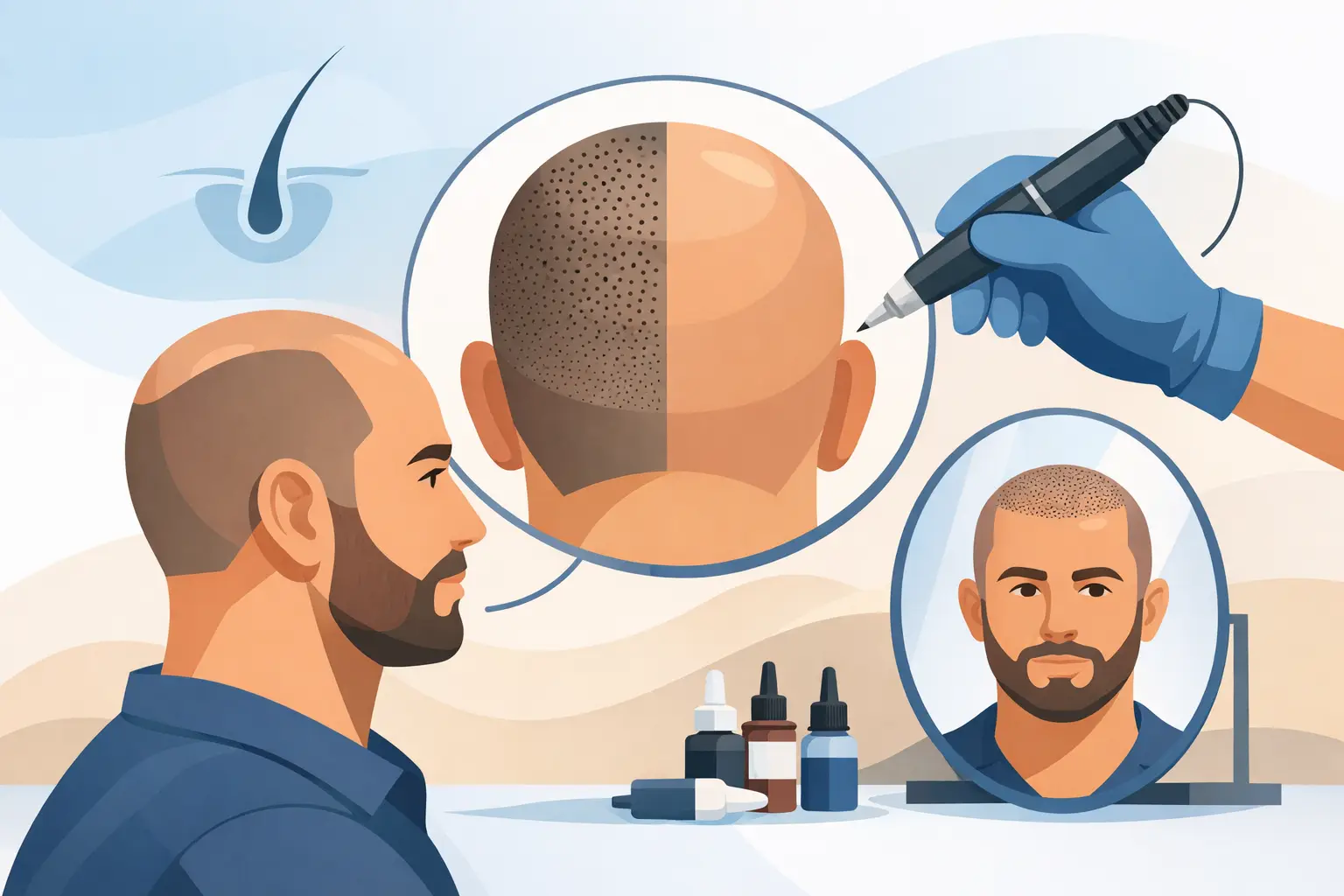
A receding hairline can change more than a mirror check. It may affect how you style your hair, whether you feel comfortable in photos, or how much attention you give to thinning areas throughout the day. Scalp micropigmentation offers a practical way to restore the appearance of a fuller hairline or greater density without surgery, but it is not the right solution for every type of hair loss.
For readers considering treatment in Thailand, the most useful question is not simply, “Does SMP work?” It is whether the result you want matches what scalp micropigmentation is designed to do. Understanding that distinction can make the decision feel far more manageable.
What scalp micropigmentation actually does
Scalp micropigmentation, often called SMP, is a non-surgical cosmetic procedure that places tiny, layered pigment deposits in the scalp. A trained practitioner uses specialized equipment and pigments to replicate the visual effect of natural hair follicles.
On a closely shaved scalp, this can create the appearance of a deliberate buzz cut with a sharper, more balanced hairline. On longer hair, it can reduce the contrast between the scalp and existing hair, making thinning areas appear denser. SMP can also help camouflage certain scars, including linear scars from older hair transplant procedures, when the scar tissue is suitable for treatment.
The key point is that SMP creates an optical result. It does not grow hair, stop genetic hair loss, or replace the biological function of follicles. That is not a limitation to hide. For many people, it is exactly why the treatment is appealing: the visual improvement can be immediate after a course of sessions, without waiting months for transplanted hair to grow.
Who tends to be a good candidate for SMP?
The best candidates are usually people whose expectations align with the visual nature of the procedure. Someone who is comfortable keeping their hair very short may find SMP especially convincing because the follicle impression blends naturally with a closely clipped style.
It can also work well for men and women with diffuse thinning, where the goal is to reduce scalp show-through rather than create a shaved-head appearance. In these cases, the practitioner uses pigment between existing hairs to create a darker, more even foundation. The result should look subtle. It should not look like a solid block of color or a painted-on hairline.
SMP may be worth exploring if you have male or female pattern thinning, a receding hairline, alopecia-related patchiness, hair transplant scars, or limited donor hair for transplant surgery. It can be particularly useful after a transplant when growth has improved the hairline but density still feels lighter than expected.
However, timing matters. If your hair loss is changing rapidly, a conservative plan is often wiser than a low, dense hairline that may no longer suit you in several years. Active scalp conditions, untreated inflammation, infection, or a history of problematic pigment reactions should be discussed before booking. A responsible practitioner should be comfortable postponing treatment when the scalp is not ready.
What the treatment process looks like
SMP is normally completed over multiple sessions, often two to four, spaced several days or weeks apart. Building the result gradually gives the practitioner room to assess how the pigment settles in your skin and adjust density, shade, and hairline softness over time.
At the consultation stage, you should discuss your hair-loss pattern, current and future hairstyle, medical history, and desired level of density. Photos taken in natural light are useful because overhead lighting can reveal thinning differently from indoor mirrors. If you are considering a hair transplant, medications, or both, mention that too. SMP should fit into a broader treatment plan rather than compete with it.
During the session, most clients describe discomfort as manageable, although sensitivity varies by person and treatment area. The hairline and temple regions can feel more sensitive than the top of the scalp. Sessions can last several hours depending on the size of the area and the complexity of the work.
Aftercare is an essential part of the outcome. Practitioners commonly ask clients to avoid heavy sweating, swimming, direct sun exposure, and washing the scalp for a short period after each session. Follow the clinic’s specific instructions rather than relying on generic advice online. Sweat, friction, and premature sun exposure can affect early healing and pigment retention.
SMP compared with transplants and medication
Hair restoration is not a one-procedure category. Each option solves a different problem, and the strongest plan sometimes combines more than one approach.
A hair transplant moves functioning follicles from a donor area to thinning or bald regions. It can produce real growing hair, but it requires suitable donor supply, a surgical recovery period, and patience while new growth develops. Transplants are often most valuable for people who want longer hairstyles and have stable enough hair loss to support a lasting design.
Hair-loss medications may slow further thinning or help preserve existing follicles. They can be a valuable part of a long-term strategy, particularly for early-stage pattern hair loss, but they require medical guidance and ongoing use. Results vary, and some people decide the potential side effects or maintenance commitment are not right for them.
SMP does not require donor hair and does not involve surgical incisions. It is often more predictable for creating the look of density on a shaved or thinning scalp, and it can be used when donor supply is limited. The trade-off is that it remains a pigment-based illusion. If your goal is to run your fingers through a full head of longer, growing hair, SMP alone cannot provide that.
For many people, a combined approach is the most realistic. Medication may help preserve existing hair, a transplant may rebuild a hairline, and SMP may make the final density look more complete. The right choice depends on your degree of loss, budget, donor capacity, health history, and how much daily maintenance you are comfortable with.
Choosing a scalp micropigmentation practitioner in Thailand
Thailand offers a wide range of aesthetic and medical services, which makes careful research especially important for residents, expatriates, and medical travelers. SMP is skill-dependent. The same procedure can look natural and confidence-building in experienced hands, or noticeably artificial when hairline design, pigment selection, and density are poorly judged.
Start with healed results, not just photographs taken immediately after treatment. Fresh pigment can appear darker or sharper before it settles. Ask to see examples that match your hair-loss pattern, skin tone, age range, and intended hairstyle. A practitioner with excellent shaved-head work may not necessarily have the same experience creating subtle density work for longer hair.
Pay attention to hairline design. A natural hairline is rarely perfectly straight, overly low, or identical on both sides. It should reflect your facial proportions, age, and likely future hair loss. A mature, softly irregular hairline often ages better than an aggressive design that looks convincing only at the start.
You should also ask about pigment quality, hygiene standards, patch-test policies when appropriate, session planning, aftercare, touch-up expectations, and how the provider approaches corrections. Clear answers are a good sign. Pressure to book immediately, promises of permanent perfection, or reluctance to discuss limitations should prompt caution.
For international visitors, plan enough time in Thailand for consultations and all recommended sessions. Trying to compress the process into a rushed itinerary can limit the practitioner’s ability to assess healing between appointments. It is also wise to ask how follow-up care and future touch-ups can be managed once you return home.
Maintenance and realistic long-term expectations
SMP is commonly described as long-lasting rather than permanent. Over time, pigment can soften or fade due to sun exposure, skin characteristics, skincare products, and lifestyle. Many clients choose a refresh session after several years to restore crispness and density.
Sun protection matters, particularly in Thailand’s strong year-round sunlight. A hat, shade, and scalp-safe sunscreen once the area has fully healed can help preserve the appearance of the treatment. If you shave your head, use gentle technique and clean tools to avoid unnecessary irritation.
The most satisfying SMP results usually come from restraint. A natural shade, carefully built density, and a hairline designed for the future can make the treatment feel like part of you rather than something you need to hide. Take the time to compare your options, ask direct questions, and choose a plan that supports not only your appearance, but also your comfort and confidence moving forward.
Leave a Reply