
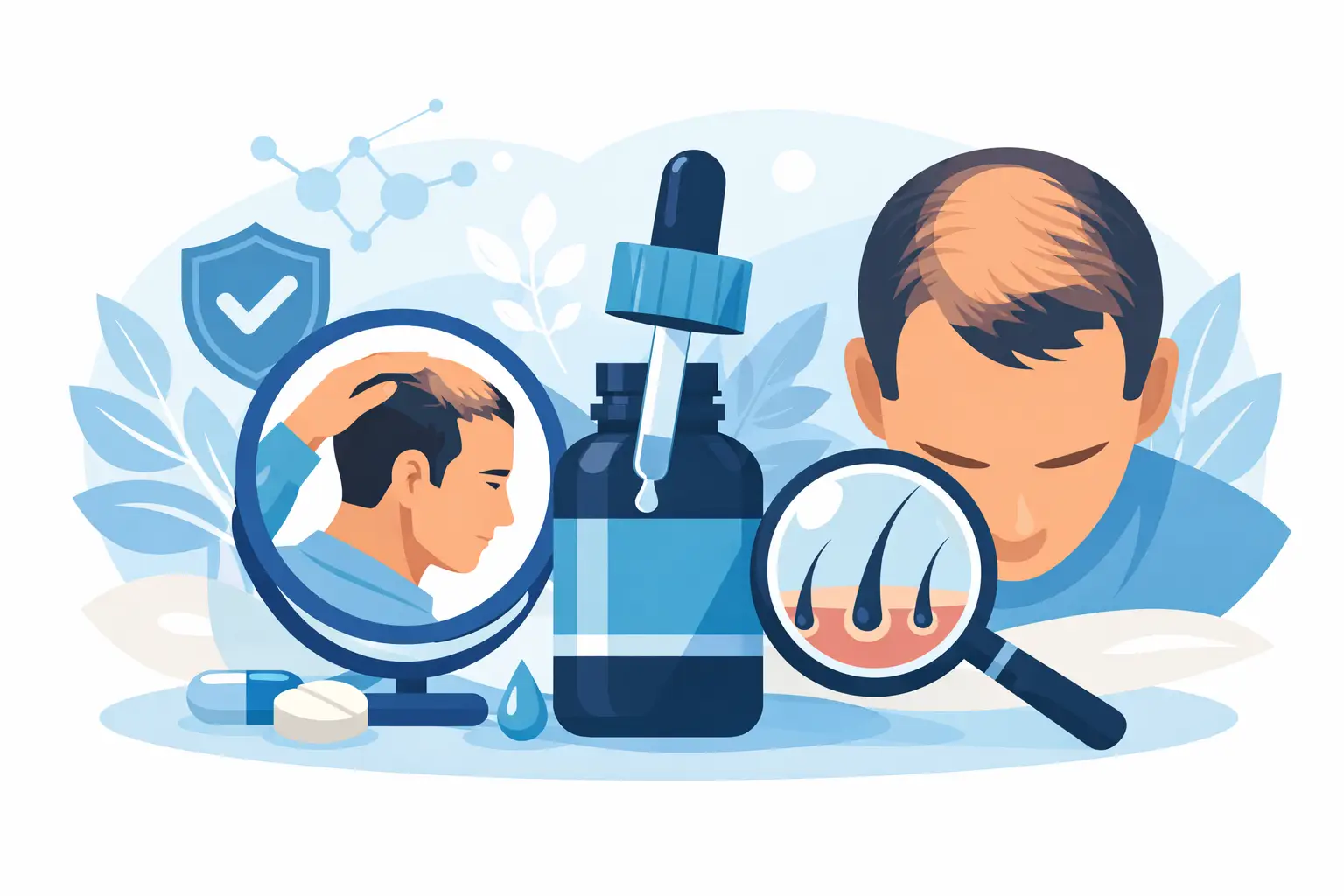
A bottle of minoxidil can seem like a simple answer to a difficult question: how do I slow visible hair loss? But is minoxidil safe is the right question to ask before adding it to your routine. For many adults, it can be used safely and effectively with the right product, dose, and expectations. It is not risk-free, though, and topical foam, topical solution, and oral tablets come with different considerations.
Hair loss can affect confidence long before it becomes medically urgent. That makes it tempting to start the first treatment that promises regrowth. A better approach is to understand what minoxidil does, who should be careful, and when a dermatologist or qualified clinician should be involved.
What minoxidil does for hair loss
Minoxidil is a medication that can help prolong the growth phase of hair follicles. It is commonly used for androgenetic alopecia, often called male-pattern or female-pattern hair loss. It may slow shedding, support thicker-looking existing hairs, and encourage some regrowth in follicles that are still active.
It does not remove the underlying genetic tendency toward hair loss. Results also vary widely. Someone with early thinning may see a meaningful improvement in density, while someone with long-standing baldness may see limited regrowth. In those cases, options such as a hair transplant or scalp micropigmentation can be more suitable for creating the appearance of coverage.
Topical minoxidil is applied directly to the scalp and is widely available in 2% and 5% strengths. Oral minoxidil is taken as a tablet. Although oral minoxidil was originally developed for blood pressure, low-dose oral use for hair loss is increasingly prescribed by clinicians. It should not be treated as interchangeable with a topical product.
Is topical minoxidil safe for most people?
For many healthy adults, topical minoxidil is considered safe when used according to the product label or a clinician’s instructions. Because it is applied to the scalp, systemic absorption is usually low. Still, “topical” does not mean side-effect free.
The most common issues are local scalp reactions. These can include itching, dryness, flaking, redness, burning, or contact dermatitis. Sometimes the problem is minoxidil itself, but often it is an ingredient in the solution, such as propylene glycol. Foam formulations may be better tolerated by people with sensitive scalps because they typically do not contain propylene glycol.
An initial increase in shedding can also happen during the first several weeks. This can be alarming, especially when you are already worried about thinning. In some cases, it reflects hairs shifting through their growth cycle before new growth begins. However, severe or persistent shedding deserves medical advice rather than reassurance from social media.
Topical minoxidil can also cause unwanted hair growth on the face or body, particularly if the product runs onto the forehead, is transferred from hands or pillows, or is used in excess. Wash your hands after application, let the scalp dry before bed, and use only the advised amount.
Oral minoxidil needs more medical oversight
Low-dose oral minoxidil can be a useful option for people who cannot tolerate topical treatment or find daily scalp application difficult. It may also be considered when topical minoxidil has not produced enough improvement. But because the medication travels throughout the body, the safety conversation is more involved.
Potential side effects include increased facial or body hair, fluid retention, ankle swelling, headache, lightheadedness, a fast heartbeat, and changes in blood pressure. The likelihood and severity can depend on the dose, your other medications, and your medical history.
A clinician may check blood pressure and ask about heart, kidney, or liver conditions before prescribing it. People taking medication for hypertension, those with a history of cardiac problems, or anyone prone to fainting should be particularly cautious. Do not use leftover blood-pressure tablets, copy a dose from an online forum, or assume that a low dose is automatically safe for you.
In the United States, oral minoxidil for hair loss is generally prescribed off-label. That does not mean it is inappropriate or experimental in every situation. It means the decision should be personalized, with clear discussion of benefits, risks, follow-up, and alternatives.
When to stop and seek medical advice
A mild itchy scalp may be manageable by changing formulation or adjusting the routine with professional guidance. Certain symptoms should not be ignored. Stop using minoxidil and seek prompt medical advice if you experience chest pain, shortness of breath, fainting, a rapid or irregular heartbeat, sudden unexplained weight gain, or swelling of the hands, feet, ankles, or face.
You should also speak with a clinician before starting minoxidil if you have a scalp infection, open wounds, severe inflammation, or sudden patchy hair loss. Applying treatment to a damaged scalp can increase irritation and absorption, while abrupt shedding can signal a condition that needs a different diagnosis.
Minoxidil is not generally recommended during pregnancy or breastfeeding unless a qualified clinician specifically advises otherwise. Keep topical products away from children and pets as well. Accidental ingestion can be dangerous, and cats in particular may be highly sensitive to minoxidil exposure.
Safer use starts with the right diagnosis
Not all thinning is androgenetic alopecia. Hair loss can be related to stress, recent illness, iron deficiency, thyroid disorders, traction from tight styles, autoimmune alopecia, medications, or nutritional issues. Minoxidil may be part of the plan for some of these situations, but it should not delay a proper assessment.
A clinician can examine the pattern of loss, scalp condition, and medical history. Depending on your symptoms, they may recommend blood tests or refer you to a dermatologist. This step is especially valuable if hair loss is sudden, patchy, painful, accompanied by scalp scaling, or occurring alongside fatigue or other physical changes.
For people considering treatment in Thailand, choose a licensed medical provider for prescription medication and a clinic that explains exactly what is being prescribed. Ask whether a product is topical or oral, what concentration or dose is being used, which side effects require contact, and how follow-up will be handled. Clear answers are a basic marker of responsible care.
Set expectations before you commit
Minoxidil requires consistency. Many people need three to six months before they can judge early changes, and visible improvement can take longer. If you stop, any hair supported by the treatment may gradually be lost over the following months.
That maintenance commitment matters. A person with early diffuse thinning may be happy to use medication long term. Someone who wants immediate visual density, does not want ongoing medication, or has an advanced receding hairline may prefer to explore other paths. Scalp micropigmentation, sometimes called a hair tattoo, can create the look of a fuller buzz cut or reduce contrast between the scalp and thinning hair. It does not regrow hair, but it can be a strong confidence-focused option on its own or alongside a medically guided hair-loss plan.
Minoxidil can be a reasonable tool, not a promise and not a decision to make blindly. Give yourself permission to ask detailed questions, choose the level of maintenance that suits your life, and seek medical guidance when your history or symptoms call for it. The best hair-restoration plan is one you can use safely and feel confident maintaining.
ใส่ความเห็น