
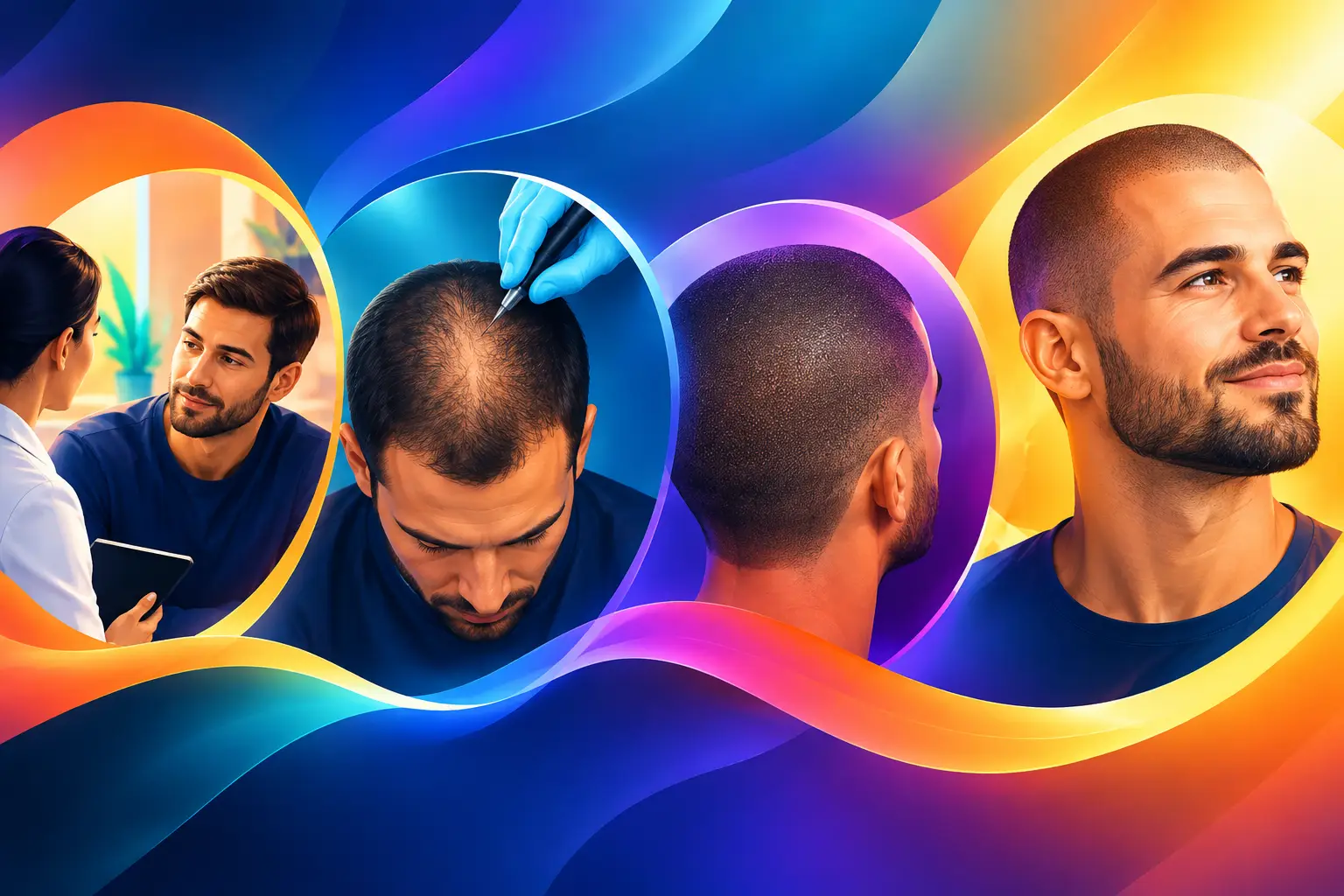
A convincing scalp micropigmentation result is not created in one appointment. Understanding how SMP sessions work helps set realistic expectations: the practitioner builds the appearance of a closely shaved scalp or fuller density gradually, using tiny pigment impressions placed in carefully planned layers.
SMP is sometimes called a hair tattoo, but the comparison only goes so far. Traditional tattooing is designed to create solid artwork that sits deep in the skin. Scalp micropigmentation uses specialized equipment, pigment, depth, spacing, and placement to recreate the soft visual pattern of hair follicles. The goal is not simply to add dark dots. It is to create an outcome that still looks natural in daylight, up close, and as your skin heals.
The consultation sets the direction
Before a first SMP session begins, a responsible practitioner should assess your pattern of hair loss, skin tone, scalp condition, existing hair, and long-term goals. This is also the time to discuss whether scalp micropigmentation is the right choice on its own or whether it may complement another option, such as a hair transplant.
For someone with advanced baldness who keeps their remaining hair very short, SMP can create the appearance of a clean, closely shaved hairline. For someone with thinning hair, it can reduce the contrast between scalp and hair, making existing coverage look denser. It is also commonly considered for transplant scars or areas where a transplant has improved coverage but has not delivered the desired visual density.
Hairline design deserves particular care. A very low or sharply defined hairline may look appealing in the mirror at first, but it can become less believable over time as the face changes and natural hair loss progresses. Most skilled practitioners recommend an age-appropriate, slightly softened hairline that suits your facial proportions and likely future hair-loss pattern.
A consultation should also cover medications, skin sensitivities, scalp conditions, prior tattoo work, and realistic maintenance. If you have active scalp irritation, uncontrolled psoriasis, a healing wound, or a tendency to form raised scars, treatment may need to be delayed or require medical guidance first.
How SMP sessions work, step by step
Most clients need two to four sessions, usually spaced about one to three weeks apart. The exact plan depends on the area being treated, the level of contrast between hair and scalp, pigment retention, and how subtle the final result needs to be. Trying to reach maximum darkness in one sitting is not a sign of efficiency. It increases the risk of an unnatural, flat, or overly dark appearance.
Session one: Building the foundation
The first session typically establishes the hairline, overall shape, and initial layer of follicle impressions. The practitioner works conservatively, often using a lighter starting density than the client expects. This restraint is intentional.
Fresh pigment can look darker immediately after treatment, while the skin is slightly red and the impressions are newly placed. Once the scalp heals, the result softens. Starting light gives the practitioner room to adjust the density in later sessions instead of trying to correct a result that is too bold.
During the appointment, the practitioner may periodically ask you to sit up, view the hairline from different angles, and confirm that the design feels balanced. A full scalp treatment may take several hours, while a scar, crown, or small thinning area can take less time.
Session two: Adding depth and density
By the second session, the practitioner can see how your skin retained the first layer. This is when the treatment begins to gain dimension. More follicle impressions are added between the first layer, with careful variation in spacing and density.
For shaved-head SMP, this session helps create the gradual transition from a lighter front hairline to fuller coverage behind it. For density work, the focus is usually on blending pigment among existing hairs without making the treated scalp look like a solid block of color.
The right pigment shade matters, but placement matters just as much. Natural-looking results are created through hundreds or thousands of individual impressions. If dots are too large, too dark, too deep, or too evenly spaced, the effect can look artificial rather than like natural follicles.
Later sessions: Refinement, not repetition
A third or fourth session is often used to refine the outcome. The practitioner may strengthen areas that healed lighter, blend the temples, soften transitions, or add density where scalp visibility remains more noticeable under bright light.
Not every client needs the same number of visits. Oily skin, frequent sun exposure, immune response, skin type, and aftercare can all affect retention. A reputable provider plans for this variation rather than promising an identical number of sessions for every person.
Does SMP hurt?
Most people describe SMP as uncomfortable rather than intensely painful. Sensation varies by individual and by treatment area. The hairline and temple areas can feel more sensitive, while other parts of the scalp may be easier to tolerate.
Practitioners can use breaks to keep you comfortable, especially during longer appointments. If a clinic offers numbing products, ask how and when they are used. Clear communication matters more than trying to push through discomfort, particularly when precise work around the front hairline is involved.
Healing between sessions
The healing period is part of the procedure, not an afterthought. Your practitioner will provide specific aftercare instructions, but clients are commonly asked to avoid washing the scalp, heavy sweating, swimming, saunas, and direct sun exposure for several days after a session. The exact timing varies by provider and your skin response.
You may notice mild redness, tenderness, or tiny dry flakes. Avoid picking or scrubbing the treated area. Prematurely removing flakes can interfere with healing and pigment retention.
Once the scalp has healed, daily sun protection becomes one of the most practical ways to preserve the appearance of SMP. UV exposure can gradually fade pigment and may create unevenness over time. If you shave your head, use a clean razor and follow your practitioner’s advice about when shaving can resume after each appointment.
What makes an SMP result look natural?
The strongest results rarely announce themselves. They make the scalp-to-hair contrast less noticeable, restore the frame of the face, and help a person feel more comfortable in photos, bright offices, gyms, and social settings.
Natural results depend on a thoughtful combination of hairline design, pigment selection, dot size, depth, density, and blending. They also depend on honesty about what SMP can and cannot do. SMP does not grow hair, stop genetic hair loss, or create long hair. On a person with longer, diffuse thinning hair, it can improve the look of density, but it may not replace a treatment plan involving medication or transplant surgery.
This is why treatment should be viewed in the context of your lifestyle. If you prefer a shaved style and want a defined, low-maintenance appearance, SMP may be a particularly strong fit. If your priority is growing and styling longer hair, a transplant assessment or medical hair-loss consultation may deserve equal consideration.
Choosing the right practitioner
Because SMP is highly visible and semi-permanent, provider selection should not be based on price alone. Ask to see healed results, not only photos taken immediately after treatment. Look for examples across different skin tones, hair-loss patterns, and age groups. A portfolio should show close-up work as well as realistic views in normal lighting.
You should also ask how the practitioner approaches future hair loss, whether they offer scar camouflage, and what touch-up expectations they set. For readers considering treatment in Thailand, it is worth asking about hygiene protocols, artist experience, consultation language, and follow-up support if you are traveling from another city or country.
A good practitioner will not pressure you into a lower hairline, darker pigment, or more aggressive density than suits you. Their job is to create a result you can continue to feel good about after the excitement of the first appointment has passed.
Maintenance and long-term expectations
SMP is considered long-lasting, but it is not permanent in the same way as a deep body tattoo. Most people will eventually want a touch-up, often after several years, depending on sun exposure, skin type, skincare habits, and how much contrast they prefer.
A touch-up is usually simpler than the initial process. It can restore faded areas, rebalance density, or adapt the look if your natural hair loss has progressed. Planning for this possibility from the beginning leads to more conservative, flexible design choices.
The best SMP journey is not about chasing a perfectly black, freshly treated scalp. It is about creating a believable frame for your face and a practical result that supports your confidence every day. Take time to compare your options, ask direct questions, and choose a plan that still makes sense for the person you will be years from now.
ใส่ความเห็น