
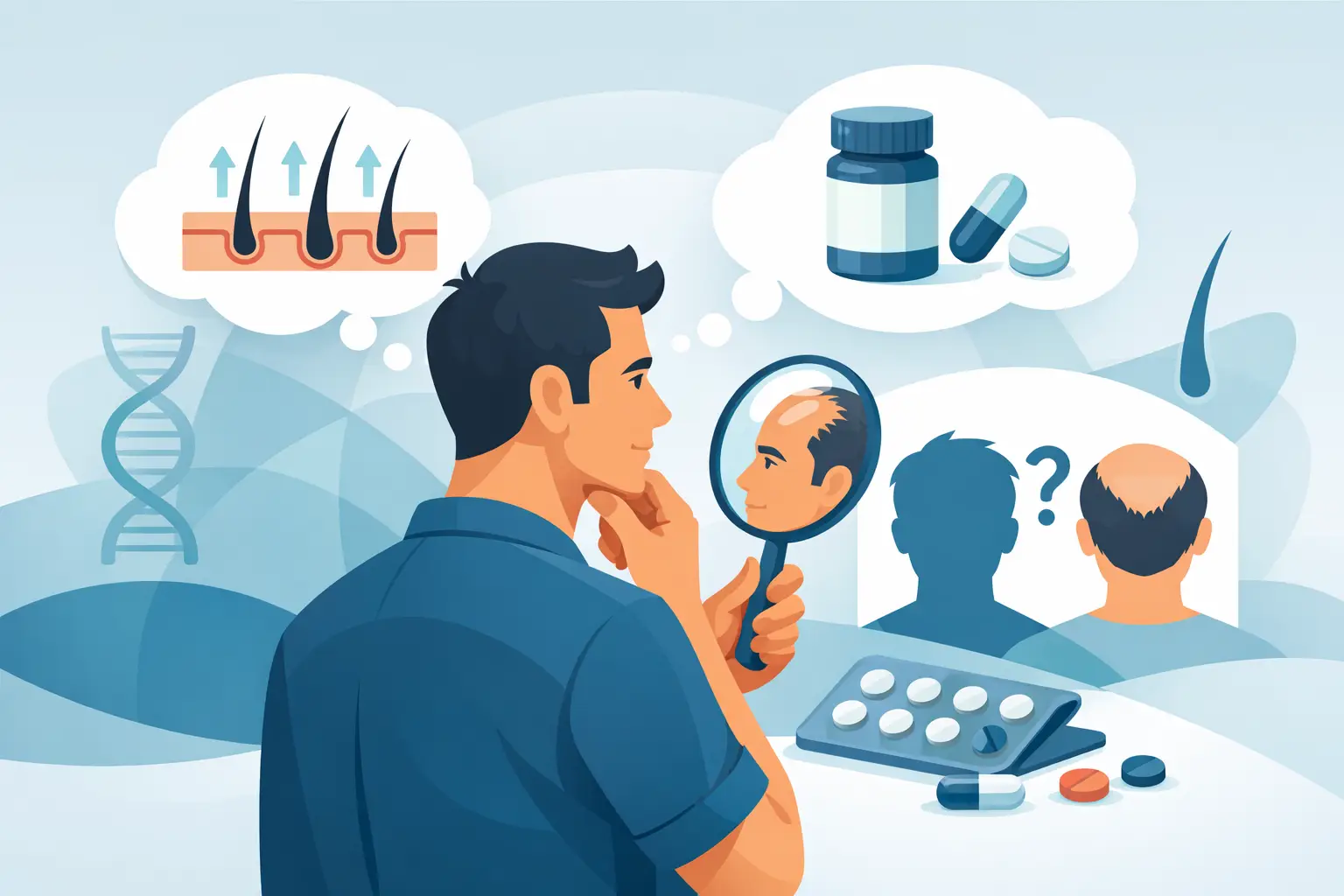
A receding hairline can feel urgent long before it becomes medically urgent. Many people start researching treatments after noticing more scalp in photos, a widening part, or a shower drain that suddenly seems impossible to ignore. Finasteride for hair loss is often one of the first treatments discussed because it can slow the biological process behind common male-pattern thinning. But it is not a quick cosmetic fix, and it is not the right choice for every person.
The most useful question is not simply, “Does finasteride work?” It is whether its potential benefits, side effects, timeline, and long-term commitment fit your goals. For some people, it becomes the foundation of a hair-preservation plan. For others, scalp micropigmentation (SMP), a transplant, or a combination approach may offer a better match for their degree of loss and the result they want to see in the mirror.
How Finasteride for Hair Loss Works
The most common cause of hair loss in men is androgenetic alopecia, also called male-pattern hair loss. In people who are genetically susceptible, the hormone dihydrotestosterone, or DHT, gradually miniaturizes certain scalp follicles. Hairs grow finer and shorter over time, particularly around the temples, hairline, and crown.
Finasteride is a prescription medication that lowers DHT levels by inhibiting an enzyme involved in its conversion from testosterone. With less DHT acting on susceptible follicles, hair shedding may slow and existing hairs may retain more thickness for longer. It does not create brand-new follicles, and it cannot reliably restore areas that have been smooth and bald for years.
For hair loss, finasteride is commonly prescribed as an oral daily tablet. Some clinicians also prescribe topical formulations, although availability, regulation, and evidence can vary by market. A qualified medical professional should help determine which option, if any, is appropriate for you.
What Results Can You Realistically Expect?
Finasteride is primarily a hair-preservation treatment. That distinction matters. Many users see reduced shedding and stabilization rather than a dramatic return to their teenage hairline. Some experience visible thickening, especially when treatment begins while follicles are still active.
Results are gradual. It may take three to six months to notice early changes, while a fair assessment often takes 9 to 12 months. During the first months, some people report increased shedding. This can be concerning, but it may reflect hairs cycling out before stronger growth emerges. Still, any troubling change deserves a conversation with the prescribing clinician rather than guesswork.
Consistency is central to the outcome. If finasteride is stopped, DHT levels rise again and the hair maintained by treatment may gradually be lost over the following months. This is why it helps to view the medication as ongoing management, not a one-time course.
The response also depends on the pattern and stage of hair loss. A person in their late twenties with early crown thinning may have a very different outcome from someone with extensive recession and a large bald crown. Genetics, age, overall health, and concurrent treatment all influence the picture.
Side Effects Deserve a Straightforward Conversation
Finasteride has helped many people manage hair loss, but it should never be presented as consequence-free. Potential sexual side effects can include reduced libido, erectile difficulties, and changes in ejaculation volume. Mood changes, breast tenderness or enlargement, and fertility-related concerns have also been reported. Side effects are not inevitable, but they are relevant enough to discuss openly before starting.
The right approach is informed consent, not fear or dismissal. Ask your prescriber how common the risks are, what symptoms should prompt a call, whether your medical history changes the decision, and what alternatives are available. If you develop side effects, do not simply push through them because of online advice. Speak with the clinician managing your treatment.
Finasteride is generally not prescribed for women who are pregnant or may become pregnant because of risks to a developing male fetus. Women experiencing hair loss need an individualized medical assessment, as causes can include hormonal changes, nutritional deficiencies, autoimmune conditions, traction, thyroid disorders, and female-pattern hair loss. The right treatment pathway may be very different.
Finasteride, Minoxidil, SMP, and Transplants
Hair loss treatment is rarely an either-or decision. Each option addresses a different part of the problem.
Minoxidil is often used alongside finasteride. While finasteride targets DHT, minoxidil can support the growth phase of the hair cycle. The combination may be more effective than either treatment alone for appropriate candidates, though it also adds another routine and its own potential side effects, such as scalp irritation with topical use.
Hair transplantation redistributes resistant donor follicles from the back or sides of the scalp into thinning areas. It can create a real hairline and add coverage, but it is surgery, donor supply is limited, and native hair can continue thinning without medical management. In many cases, a surgeon may recommend stabilizing hair loss before or after a transplant.
SMP does not regrow hair or alter hormones. Instead, it uses carefully placed pigment impressions to reduce the contrast between scalp and hair. For shaved styles, it can create the look of a closely cropped hairline. For people with thinning hair, it can add the appearance of density by making the scalp less visible through existing strands.
That makes SMP particularly valuable for people who do not want medication, cannot tolerate it, have limited transplant donor hair, or want a cosmetic improvement while deciding on longer-term treatment. It can also complement finasteride. Medication may help preserve the hair you have, while SMP improves the visual effect of coverage now.
Who May Be a Good Candidate?
Finasteride may be worth discussing with a clinician if you have a recognizable pattern of androgenetic hair loss, especially if thinning is recent or progressing. It can be particularly useful for crown and mid-scalp thinning, although individual response at the frontal hairline varies.
A medical consultation should come before treatment because not every form of shedding is DHT-related. Sudden diffuse hair loss, circular patches, scalp pain, itching, scaling, or hair loss after illness or major stress may point to another cause. Treating the wrong diagnosis with finasteride can delay care that would be more useful.
It is also wise to consider your priorities. If your main goal is to stop further loss and you are comfortable taking a prescription medication long term, finasteride may fit. If your priority is immediate visual density without a daily medication, SMP may be more aligned. If you have advanced loss but strong donor hair and want actual hair growth in a new hairline, a transplant consultation may be appropriate.
Questions to Ask Before You Start
A productive appointment goes beyond asking for a prescription. Bring photos showing how your hair has changed over time, and ask whether your pattern appears stable or actively progressing. Discuss your family history, current medications, mental health history, future fertility plans, and any past reactions to hair-loss treatments.
You should also ask how results will be measured. Clear baseline photographs, taken in the same lighting and angle every few months, are more reliable than checking the mirror every morning. Hair changes are slow, and anxiety can make normal day-to-day variation feel like treatment failure.
If you are considering treatment in Thailand, look for a licensed clinician who is willing to explain both benefits and limitations in clear terms. A trustworthy provider will not pressure you toward medication, surgery, or cosmetic treatment before understanding your hair-loss pattern and expectations.
Build a Plan That Supports Confidence
Finasteride can be a meaningful option for slowing androgenetic hair loss, but its value lies in choosing it for the right reason and using it with realistic expectations. The best plan may involve medication alone, medication with minoxidil, an eventual transplant, SMP for visual density, or no prescription treatment at all.
Your hair-loss decision does not need to be rushed or driven by a single alarming photograph. Give yourself room to understand the cause, weigh the trade-offs, and choose the option that supports both your appearance goals and your peace of mind.
ใส่ความเห็น