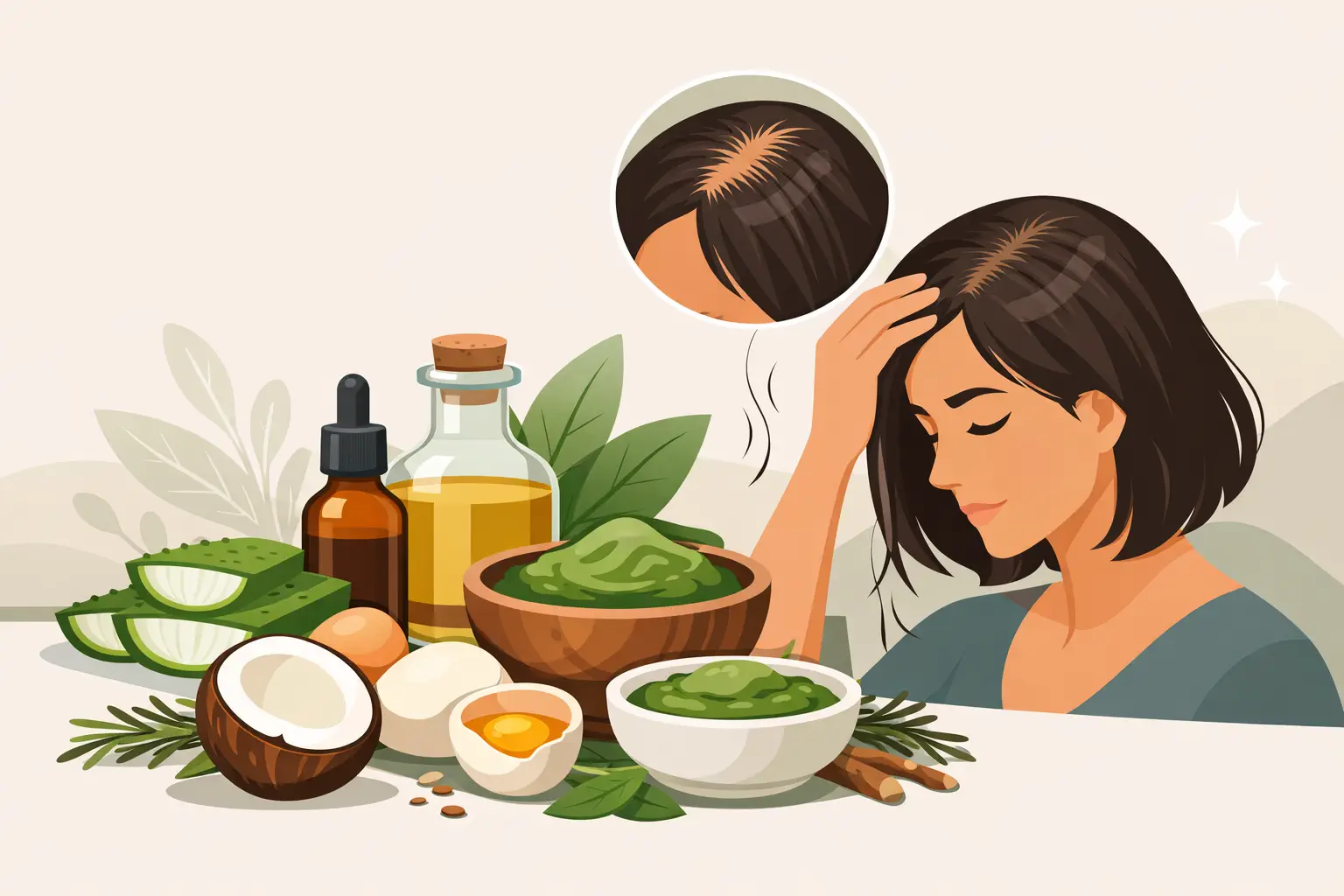
Hair shedding can make even a normal shower feel stressful. Natural hair loss remedies are appealing because they feel gentle, accessible, and within your control. Some can support healthier hair and a calmer scalp, but few can reverse genetic pattern hair loss on their own. The most useful approach is to understand what each remedy can realistically do, then decide whether it belongs in your routine or whether a medical or cosmetic option would better match your goals.
What natural remedies can and cannot change
Hair loss is not one condition. It can be related to hereditary sensitivity to hormones, a recent illness, emotional stress, rapid weight loss, iron deficiency, thyroid changes, tight styling, scalp inflammation, medications, or autoimmune conditions such as alopecia areata. The cause affects the right next step.
Natural approaches may improve scalp comfort, reduce hair-shaft breakage, correct a dietary gap, or support recovery from temporary shedding. They are less likely to regrow hair in areas where follicles have gradually miniaturized from androgenetic alopecia, the common form of male and female pattern hair loss. A receding hairline, widening part, or thinning crown that has progressed over years usually needs more than a homemade oil blend.
That does not make natural care pointless. It means setting a fair expectation: use it to support the hair you have, not as a promise that every dormant-looking area will fill in again.
Natural hair loss remedies with the strongest practical value
Build meals around adequate protein and key nutrients
Hair is largely made of protein. Restrictive diets, skipped meals, and sudden weight loss can push more hairs into a shedding phase several months later. Consistently eating enough protein from foods such as fish, eggs, poultry, tofu, beans, dairy, and lentils is a practical foundation, especially for people who are active, dieting, or recovering from illness.
Iron, vitamin D, zinc, vitamin B12, and folate also matter when levels are low. However, taking high-dose supplements “just in case” is not a reliable hair-loss remedy. Too much selenium, vitamin A, or certain other supplements may actually contribute to shedding. If hair loss is diffuse, new, or accompanied by fatigue, heavy periods, dietary restriction, or other symptoms, testing through a qualified clinician is more useful than guessing.
Consider rosemary oil carefully
Rosemary oil receives a great deal of attention online. Limited research suggests it may have a role in supporting hair growth for some people, potentially through scalp circulation and anti-inflammatory effects. That is encouraging, but it is not proof that rosemary oil performs equally well for every cause or stage of hair loss.
If you choose to try it, dilute a few drops in a carrier oil such as jojoba oil before applying it to the scalp. Never use undiluted essential oil directly on the skin. Patch-test first, use it only a few times a week, and stop if you develop burning, redness, flaking, or increased itching. Results, if they occur, take months rather than days.
For people with seborrheic dermatitis, psoriasis, eczema, or a sensitive scalp, oils can sometimes make irritation worse. In that situation, gentle scalp treatment is usually more valuable than adding another product.
Treat the scalp with the same care as facial skin
A healthy scalp is not a guarantee of regrowth, but inflammation and buildup can make hair feel weaker and shedding more noticeable. Wash regularly enough for your hair type, particularly if you use styling products, sweat frequently, or have an oily scalp. Clean does not mean harsh: aggressive scratching, very hot water, and frequent stripping shampoos can leave the scalp irritated.
A short fingertip massage during washing or while applying a suitable scalp product may feel relaxing and can encourage consistent attention to the area. Avoid using nails or forceful rubbing. Hair follicles do not benefit from friction, and fragile hairs can break when handled roughly.
Reduce traction and heat damage
Not all thinning begins at the follicle. Tight ponytails, braids, extensions, headwear that rubs the same spot, chemical processing, and repeated high-heat styling can cause breakage or traction-related loss. The hairline and temples are particularly vulnerable.
Choose looser styles when possible, vary the part, limit high-tension extension methods, and use a heat protectant before blow-drying or using hot tools. These changes may sound basic, but they can be meaningful when the problem is mechanical damage rather than internal hair loss.
Support recovery after stress or illness
Telogen effluvium is a common type of temporary shedding that can occur after fever, surgery, childbirth, significant stress, infection, or rapid changes in diet and weight. The shedding often begins two to three months after the trigger, which can make the connection easy to miss.
No oil or supplement can immediately stop this cycle. The most helpful natural support is steady nutrition, adequate sleep, gentle hair care, and patience while the underlying trigger resolves. If shedding is severe, lasts longer than six months, or occurs alongside scalp pain, bald patches, or symptoms of illness, seek professional assessment rather than waiting indefinitely.
Popular remedies that deserve a reality check
Onion juice, garlic, cayenne, castor oil, and strongly fragranced herbal mixtures are commonly promoted for regrowth. The problem is not that every traditional ingredient is useless. The problem is that evidence is often limited, product quality varies, and scalp irritation can create a new problem while you are trying to solve another one.
Castor oil can make hair look shinier and reduce the appearance of dryness, but there is no strong evidence that it regrows hair. Onion juice has been studied in limited settings, yet it can cause dermatitis and has an unpleasant odor that makes consistent use difficult. A remedy that inflames your scalp, clogs follicles, or makes you stop washing properly is not a good trade-off.
Be skeptical of any product that promises to “activate sleeping follicles” in a few weeks or claims that hair loss is always caused by poor circulation. Hair biology is more complex than that, and trustworthy care should make room for uncertainty.
When natural care should be only one part of the plan
If your aim is to slow hereditary thinning, preserve existing follicles, or address a rapidly receding hairline, evidence-based medical guidance can make a substantial difference. A dermatologist or hair-restoration specialist can help distinguish pattern loss from temporary shedding, scalp disease, nutritional deficiency, or autoimmune hair loss. That clarity protects you from spending months on the wrong solution.
Some people combine supportive natural habits with medication or transplant planning. Others decide they do not want medication, surgery, or the upkeep those options may require. For visible thinning, scalp micropigmentation can be another confidence-focused path. SMP does not grow hair, but it can create the appearance of density in thinning areas, reduce contrast between scalp and hair, or recreate the look of a closely shaved hairline. It can also complement a transplant when more visual fullness is the goal.
The right choice depends on your pattern of loss, scalp condition, budget, tolerance for maintenance, and desired look. A person with temporary post-illness shedding needs a different plan from someone whose crown has thinned gradually for a decade.
A practical way to evaluate your routine
Give any gentle, low-risk routine enough time to judge it fairly. Take photos in the same lighting and part your hair the same way once a month. Notice whether you are seeing less breakage, less scalp discomfort, or new short growth around previously thinning areas. Hair grows slowly, so daily mirror checks tend to create more anxiety than useful information.
At the same time, do not let “natural” become a reason to delay care for warning signs. Sudden patchy loss, scalp scaling or pain, eyebrow loss, scarring, dramatic shedding, or changes after a new medication deserve timely evaluation. Earlier assessment can preserve more options.
Your hair-loss plan does not have to be all-natural or all-clinical. Start with honest expectations, protect your scalp and existing hair, and choose the level of treatment that helps you feel informed, comfortable, and more confident when you look in the mirror.
Leave a Reply