
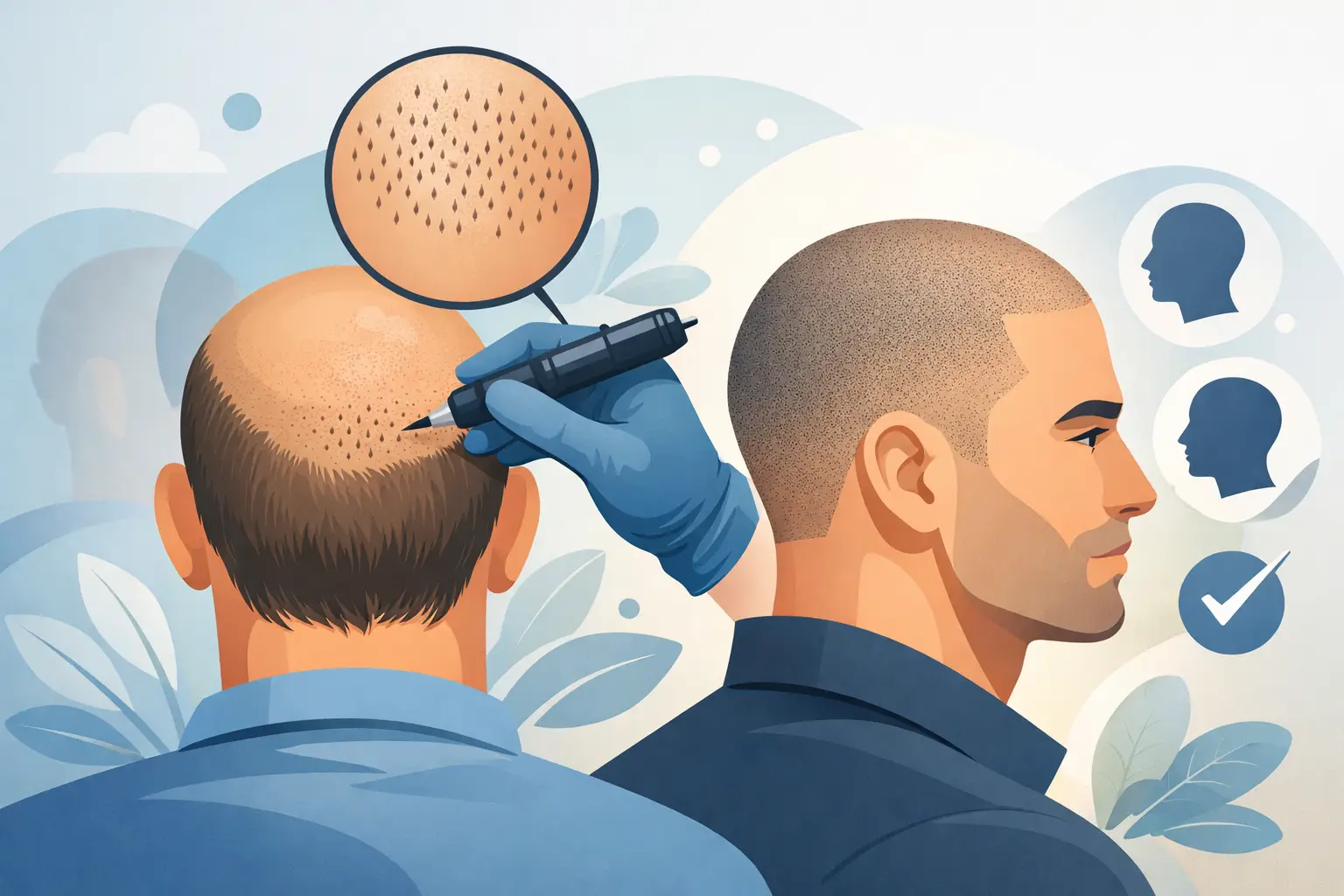
A freshly shaved scalp can make hair loss feel more visible than ever, which is why the question, does scalp micropigmentation look natural, matters far more than whether the treatment simply looks good in a clinic photo. The goal is not to create a painted-on hairline. It is to recreate the visual effect of closely shaved follicles in a way that suits your age, skin tone, facial structure, and pattern of hair loss.
When it is performed well, scalp micropigmentation, often called SMP or a hair tattoo, can look remarkably believable at normal conversational distance. When it is poorly planned or applied, it can look too dark, too sharp, too dense, or disconnected from the way real hair grows. The difference comes down to design, technique, healing, and long-term judgment.
Does Scalp Micropigmentation Look Natural in Real Life?
For the right candidate and with a skilled practitioner, SMP can create a natural-looking shaved-head appearance, make thinning hair appear denser, or soften the contrast of transplant scars. It does not create actual hair or restore the feel of hair stubble. Instead, it uses tiny layered pigment impressions to imitate the shadow created by hair follicles beneath very short hair.
That distinction is useful. SMP is most convincing when people see the overall frame of the face first, not individual dots on the scalp. At a normal social distance, the treatment should read as a deliberate buzz-cut style or fuller coverage beneath existing hair. Up close, a trained eye may still recognize that it is pigmentation. Natural-looking does not mean invisible under every light, from every angle, at every distance.
Results also depend on the starting point. Someone with a fully shaved head and stable hair loss may achieve a highly realistic outcome because the treatment is designed as a complete close-cropped look. Someone with diffuse thinning can use SMP to reduce the contrast between scalp and hair, but will still need to keep enough hair length for the two to blend. If the hair is grown long while the scalp is heavily pigmented, the effect can become less convincing.
What Makes SMP Look Real Rather Than Obvious?
Natural SMP is built gradually. A practitioner should use several sessions to establish soft foundation density, then add detail where it is needed. Trying to make the scalp look fully dark in one appointment is one of the clearest paths to an artificial result.
A conservative, age-appropriate hairline
The hairline carries most of the visual responsibility. A natural hairline is rarely a perfectly straight line drawn across the forehead. It has slight irregularity, gentle recession at the temples, and a shape that fits the person wearing it.
A lower, very crisp hairline can be tempting, especially for someone who remembers having thicker hair at 20. But a mature hairline often looks more credible and tends to age better. The strongest practitioners will explain why a small amount of recession can protect the realism of the result years from now.
Pigment depth and color choice
SMP pigment should be selected and diluted with the client’s skin tone, hair color, and expected healing response in mind. The ideal shade usually looks softer after healing than it appears during a session. Pigment that is too dark or too cool can create a bluish or flat cast, particularly on lighter skin or in bright daylight.
This is not the same as decorative tattooing. Hair tattoos require a different approach to pigment formulation, dot size, placement, and depth. The aim is a fine follicular impression, not a bold graphic design. A practitioner who works too deeply may increase the chance of pigment spreading or changing in appearance over time.
Variation in density and placement
Real hair does not grow in a perfectly uniform grid. Density changes across the scalp, and the frontal hairline tends to be softer than the mid-scalp. Skilled SMP practitioners account for this by spacing impressions carefully and avoiding a repetitive pattern.
This matters particularly around the temples, crown, and transition from natural hair into treated areas. A convincing result has visual softness. It should not look like a solid helmet of color or a hard wall where pigmentation begins.
The right match with your existing hair
For men and women with thinning rather than complete baldness, natural results depend on matching the density to the remaining hair. The practitioner must consider how short you are willing to wear it, whether your thinning may progress, and how your hair looks when wet, oily, or exposed to sunlight.
SMP can make fine hair appear fuller by reducing scalp show-through. It cannot stop future shedding. If hair loss continues, the original treatment plan may need adjustment so the pigmentation remains balanced with the new pattern of loss.
Healing Changes the First Impression
Immediately after a session, the scalp may look darker, sharper, and more defined than the final result. This is normal. As the area heals, pigment impressions usually soften and settle. Most treatment plans involve two to four sessions, spaced apart to allow the practitioner to assess how the skin retains pigment before building more density.
Following aftercare matters. Clients are commonly asked to avoid heavy sweating, swimming, direct sun exposure, and washing the scalp for a short period after treatment, according to the practitioner’s instructions. Picking at healing skin or ignoring sun protection can affect pigment retention and the evenness of the result.
Do not judge SMP solely from same-day photos. Ask to see healed work, ideally photographed in natural light, indoors, and from different angles. A good consultation should include honest discussion about healing, maintenance, and the possibility that some areas will need more layering than others.
Who Is Most Likely to Be Happy With the Look?
SMP often suits people who are comfortable with a close-shaved style, want to reduce the appearance of diffuse thinning, have scars from a previous hair transplant, or live with stable alopecia-related hair loss. It can also be a practical complement to a transplant when donor supply is limited and additional visual density is needed.
It may be less suitable for someone who wants long, touchable hair, expects a permanent no-maintenance solution, or is still uncertain about how they want their hairline to look. A rushed decision is rarely helpful when the result sits at the center of your face every day.
People with active scalp conditions, certain skin sensitivities, or rapidly changing hair loss should seek an individualized assessment first. In some cases, medical treatment, a transplant, or simply waiting until hair loss is more stable may be the better next step. SMP is a cosmetic camouflage treatment, not a medical cure for hair loss.
How to Assess a Practitioner Before You Commit
The practitioner’s portfolio should show more than dramatic before-and-after images. Look for healed results across different skin tones, ages, hair-loss patterns, and lighting conditions. Pay special attention to hairlines. Are they soft and varied? Do they look appropriate for the client’s age? Is the density believable near the temples and crown?
During a consultation, ask how many sessions are recommended, what pigment will be used, how the hairline will be designed, and how future hair loss would be handled. You should also ask about hygiene protocols, patch testing where appropriate, aftercare, and touch-up expectations. Clear answers are a sign of careful practice, not a sales pitch.
For people considering treatment in Thailand, provider selection deserves the same care as it would anywhere else. Cost can be part of the decision, but it should not outweigh healed-work quality, experience with your hair-loss pattern, and a consultation that leaves you feeling informed rather than pressured. SMP Thailand encourages readers to compare options with the full picture in mind, including medication, transplantation, and cosmetic solutions.
Maintenance Is Part of a Natural Result
SMP is considered long-lasting, but it is not usually permanent in the way people imagine. Sun exposure, skin turnover, lifestyle, and individual pigment retention can gradually soften the result. Many people choose a refresh session after several years to restore definition or adapt the design as their appearance changes.
Daily sunscreen is one of the simplest ways to protect both the scalp and the visual quality of pigmentation. If you shave your head, use gentle technique and products that do not irritate the skin. If you keep existing hair short, maintain a consistent length so the treated and untreated areas continue to blend naturally.
The most natural SMP results are not the darkest or most dramatic. They are the ones that make you look like yourself – rested, intentional, and comfortable in your appearance. Give yourself permission to choose a conservative plan, review healed evidence, and work with a practitioner who sees confidence as the outcome, not just pigment on the scalp.
Leave a Reply